In Argentina, barbecue is far more than a simple cooking technique—it is a cherished cultural institution and a weekly gathering centered around family, community, and exceptional beef. Mastering an authentic Argentine asado requires patience, deep respect for quality ingredients, and precise control over wood coals. Unlike quick-gas grilling common in Western barbecue, an asado unfolds slowly over several hours, transforming prime beef cuts into tender, smoky masterpieces.
Whether you are planning a culinary trip to Buenos Aires or looking to recreate this iconic ritual in your own backyard, understanding the mechanics of an authentic Argentine asado will elevate your appreciation for South American food culture. This definitive guide explores essential meat cuts, coal management secrets, side pairings, and the unspoken social rules that govern every successful gathering.
Key Takeaways
- Patience over Flames: True asado relies exclusively on glowing wood embers or charcoal coals, never open flames or gas burners.
- Essential Cut Lineup: Starts with organ meats (achuras) like chorizo and morcilla, followed by flagship cuts like tira de asado (short ribs) and vacio (flank steak).
- Minimalist Seasoning: High-quality beef requires only coarse sea salt (sal parrillera) before hitting the iron grate (parrilla).
- The Asador’s Authority: The grill master (asador) directs the pace of the meal; custom dictates clapping for the asador at the end of the feast.
1. The Fire & Equipment: Fueling the Parrilla
The foundation of any authentic Argentine asado begins long before meat touches metal. Gas grills and artificial lighter fluids are strictly avoided, as chemical additives ruin the subtle flavor profiles of slow-roasted beef.
Wood vs. Charcoal
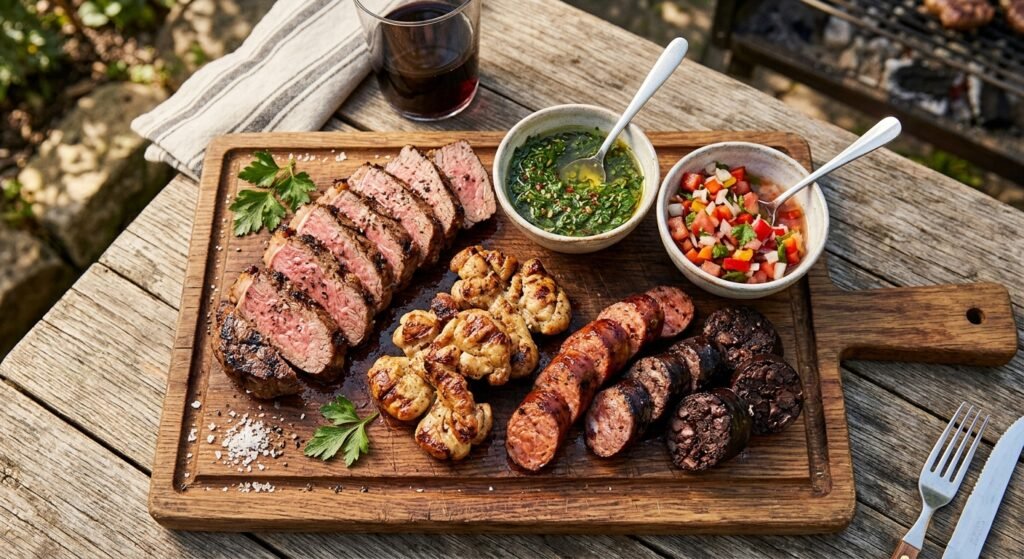
- Quebracho Wood: Traditional asadors prefer dense hardwoods like quebracho, which burn slowly and produce steady, long-lasting heat with rich aromatic smoke.
- Charcoal (Carbón): High-grade lump charcoal provides consistent heat when hardwood is unavailable.
The Brasero Method
Coals are ignited separately in a side metal cage called a brasero. Once embers glow orange, the asador uses a rake to spread a uniform layer underneath the elevated parrilla (grill grate).
2. Essential Meat Cuts: The Asado Hierarchy
An authentic Argentine asado progresses through structured courses, moving from savory appetizers to thick primary cuts.
[Internal Link: Discover our complete guide to South American culinary travel traditions]
The Starters (Achuras)
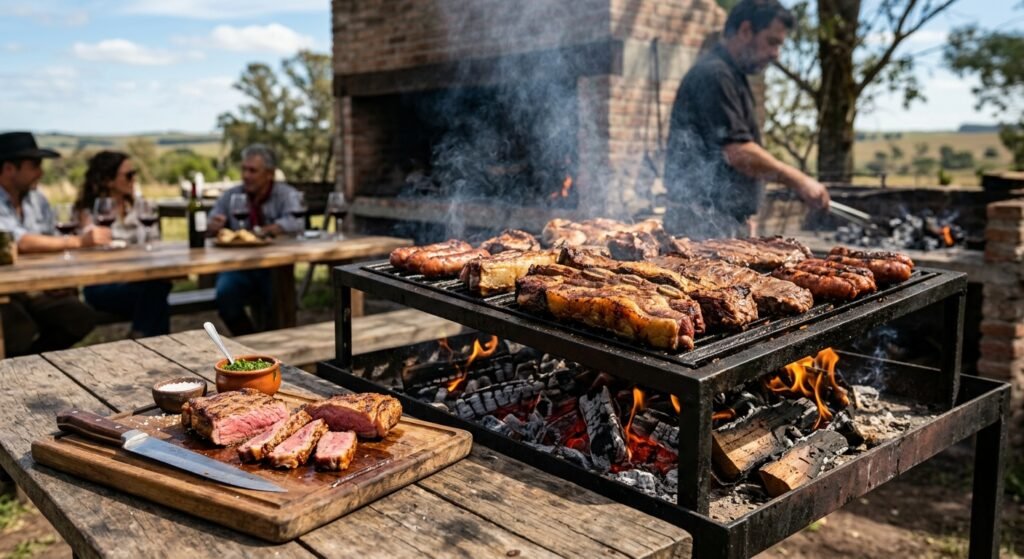
- Chorizo & Morcilla: Fresh pork sausages and rich blood sausages baked over medium heat. Servings often yield choripán—a grilled sausage sandwich slathered with chimichurri.
- Mollejas (Sweetbreads): Crispy, lemon-sprinkled sweetbreads serve as a prized starter delicacy.
The Main Event Cuts
- Tira de Asado: Flanken-cut short ribs sliced crosswise across the bone, delivering intense flavor and rendered fat richness.
- Vacío: A thick, flavorful flank steak cut encased in a thin layer of fat that crisps over slow coals.
- Ojo de Bife: Ribeye steak, celebrated for tender marbling and juicy texture.
[External Link: Explore beef cut classification standards on the official Argentine Beef Promotion Institute site]
3. Seasoning & Sauces: Simplicity at Its Finest
Modern BBQ rubs heavily feature sugar, paprika, and garlic powder, but an authentic Argentine asado keeps seasoning remarkably simple.
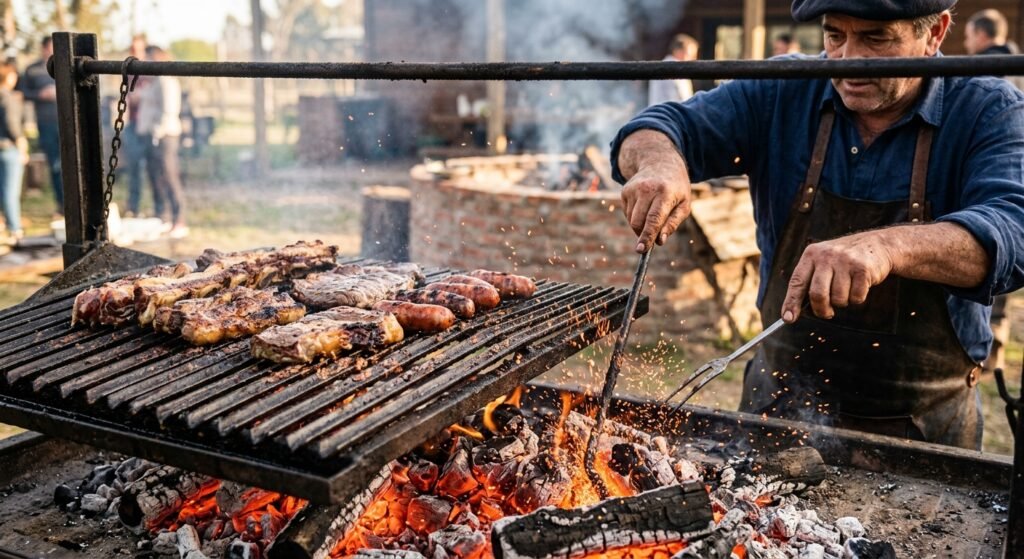
- Sal Parrillera: Coarse sea salt is applied generously right before meat goes on the grill, forming a flavorful crust without drawing out juices early.
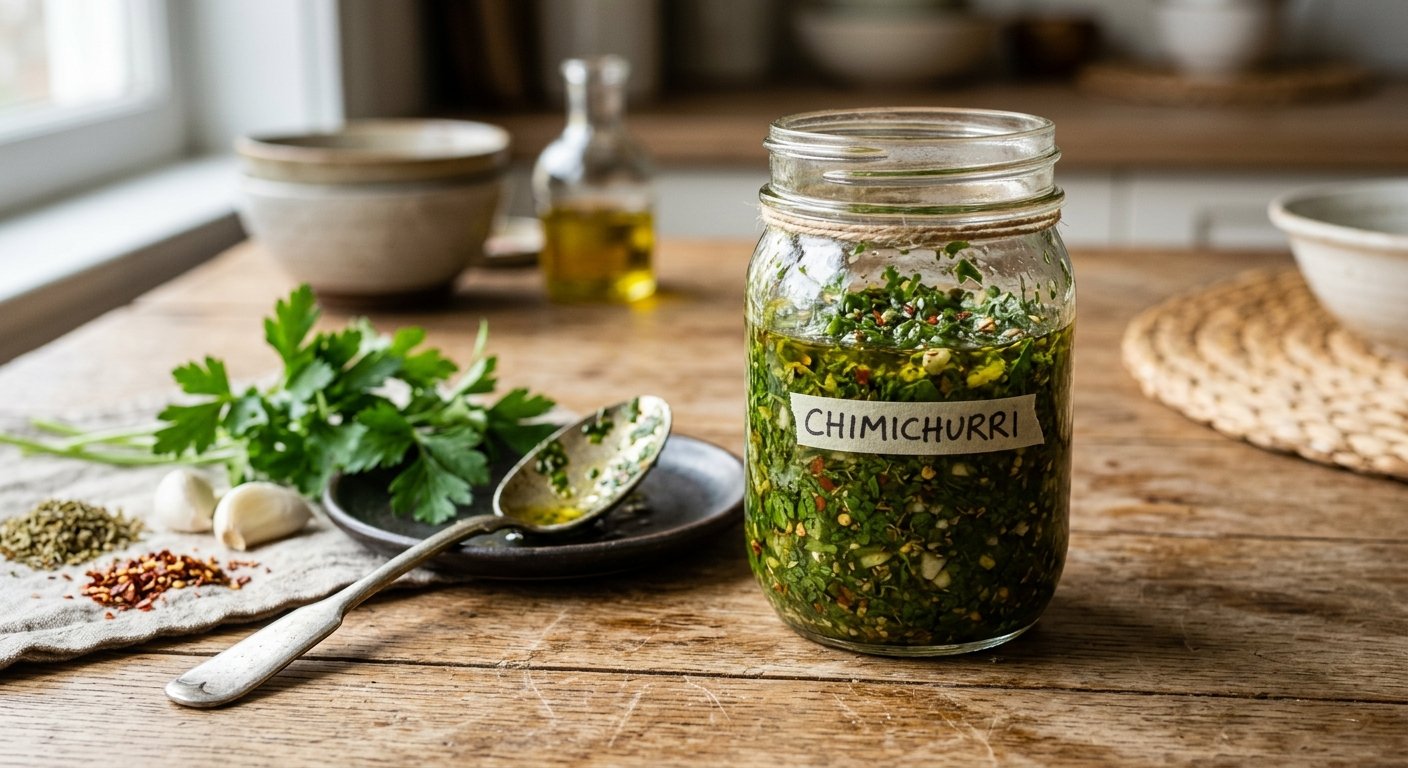
- Chimichurri: A vibrant raw sauce crafted from fresh flat-leaf parsley, minced garlic, oregano, red wine vinegar, olive oil, and crushed red pepper flakes.
- Salsa Criolla: A diced relish composed of tomatoes, onions, bell peppers, olive oil, and vinegar that adds bright acidity to rich meats.
4. Etiquette & Social Rules of the Asado
Plaintext
1. Never Touch the Fire ➔ 2. Pace the Courses ➔ 3. Pair with Malbec ➔ 4. Applaud the Asador
- Respect the Asador: Only the appointed grill master controls the fire, turns the meat, and decides when cuts are ready. Guests should never interfere with the parrilla.
- Pacing is Everything: An asado lasts 3 to 5 hours. Courses arrive gradually alongside light salads (tomato, onion, and lettuce) and warm crusty bread.
- Wine Pairing: Serve full-bodied Argentine red wines—specifically Mendoza Malbec or Cabernet Franc—to cut through the richness of the beef fat.
- Un Aplauso para el Asador: At the conclusion of the meal, host guests initiate a collective round of applause to honor the chef’s work.
Conclusion
Experiencing an authentic Argentine asado transcends standard outdoor dining—it captures the heart of Argentine culture through food, fire, and togetherness. By selecting prime cuts, managing hardwood embers with care, and keeping seasonings minimal, you can recreate this iconic South American grilling tradition with total confidence. Gather your friends, pour a glass of Malbec, and enjoy a slow-paced feast worth remembering!
Frequently Asked Questions (FAQs)
What makes an authentic Argentine asado different from American BBQ?
An authentic Argentine asado uses no sweet sauces, wood smoke chips, or heavy spice rubs—only coarse salt and wood coals. Meat is cooked slowly over medium indirect heat rather than low-and-slow smoking or fast high-heat searing.
What is the best cut of beef for an authentic Argentine asado?
The two most defining cuts are tira de asado (cross-cut short ribs) and vacío (flank steak cut with fat cap intact).
How long does a traditional Argentine asado take to prepare?
From starting the hardwood fire to serving final beef courses, a full asado typically spans 3 to 5 hours, serving as a social event for friends and family.