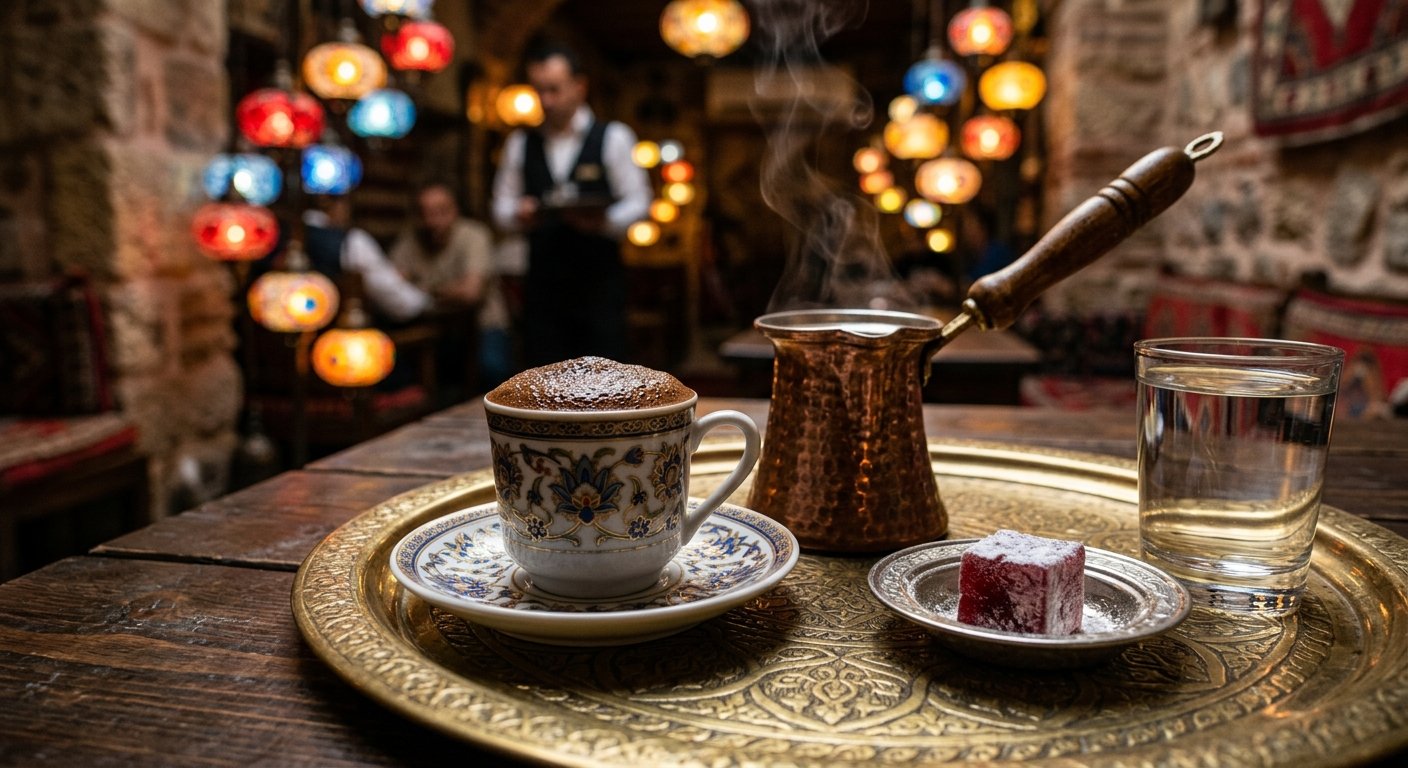
In Turkey, coffee is far more than a morning pick-me-up; it is a sacred social ritual, a pillar of hospitality, and a UNESCO-recognized cultural heritage. The famous Turkish proverb states, “A single cup of coffee commits one to forty years of friendship.” This simple phrase captures the essence of traditional Turkish coffee—a drink designed to slow down time, spark deep conversation, and forge lasting human connections.
From the 16th-century Ottoman imperial court to the vibrant streets of modern Istanbul, traditional Turkish coffee has preserved its meticulous preparation methods, thick velvety foam, and rich social customs. Whether you are a curious traveler or an avid home barista, this guide covers the history, brewing steps, fortune-telling rituals, and legendary Istanbul cafes to visit.
Key Takeaways
- UNESCO Recognition: In 2013, Turkish coffee culture and tradition were inscribed on the UNESCO Intangible Cultural Heritage list.
- Unfiltered Extraction: Unlike drip or espresso preparations, traditional Turkish coffee is brewed unfiltered with extra-finely ground beans that settle at the bottom of the cup.
- Sugar Added During Brewing: Sweetness level (Sade, Az Şekerli, Orta, or Şekerli) must be specified before cooking, as sugar is never added after pouring.
- Cultural Rituals: Every authentic serving is paired with a glass of water and a sweet bite (like Turkish delight), often followed by the fortune-telling art of tasseography.
1. History: From Ottoman Palaces to UNESCO Heritage
The story of traditional Turkish coffee began in the mid-16th century when Özdemir Pasha, the Ottoman Governor of Yemen, brought aromatic coffee beans to Istanbul during the reign of Sultan Suleiman the Magnificent.
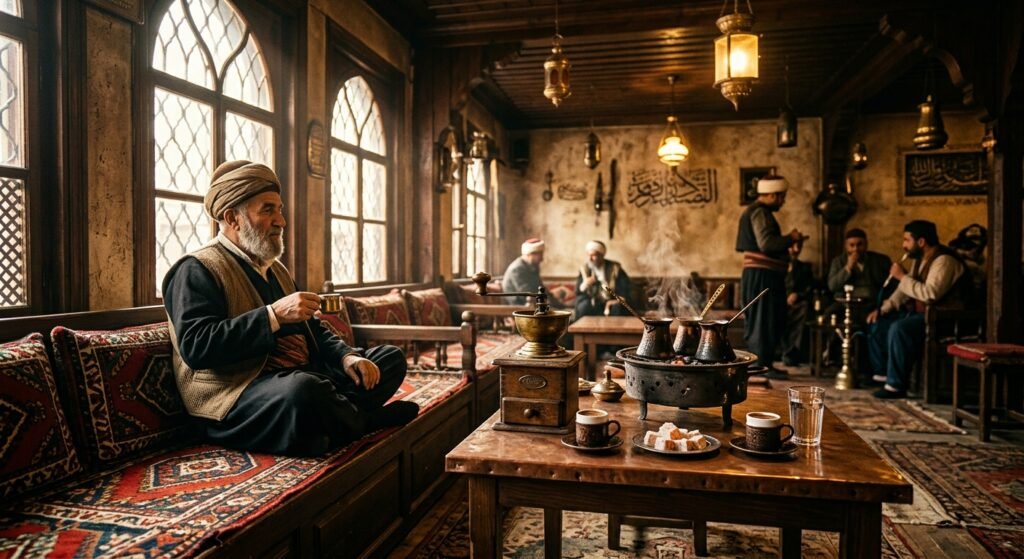
The Ottoman Imperial Kitchens
Within the Ottoman court, dedicated coffee masters known as kahvecibaşı refined the preparation technique. Beans were micro-ground using hand mortars, then slowly simmered in small copper pots called cezve. The drink’s popularity spread quickly from the palace to the public, leading to the world’s first formal coffeehouses in Istanbul’s Tahtakale district around 1554.
UNESCO Cultural Distinction
In 2013, UNESCO officially added Turkish coffee to its Intangible Cultural Heritage of Humanity list. The honor recognizes not just the beverage itself, but the entire cultural ecosystem—craftsmanship of copper cezve pots, hospitality customs, literature, and communal bonding.
2. Preparation Ritual: How to Brew Authentic Turkish Coffee
Brewing traditional Turkish coffee requires patience, precision, and low heat to yield the signature layer of dense foam (köpük).
[Internal Link: Check out our complete guide to night market food safety and local dining etiquette]
The Sweetness System
Because sugar is added directly into the cezve during the cold mixing stage, you must choose your preferred sweetness level when ordering:
- Sade (Plain): No sugar added.
- Az Şekerli (Little Sugar): Approximately ½ teaspoon of sugar.
- Orta (Medium): Approximately 1 teaspoon of sugar (the most popular choice).
- Şekerli (Sweet): 2 teaspoons of sugar.
Step-by-Step Brewing Method
- Grind Extra Fine: Use coffee beans ground into a powder as fine as flour.
- Combine Ingredients: Pour one small fincan cup of cold filtered water, 1 to 2 heaped teaspoons of coffee powder, and desired sugar into the cezve. Stir once while cold.
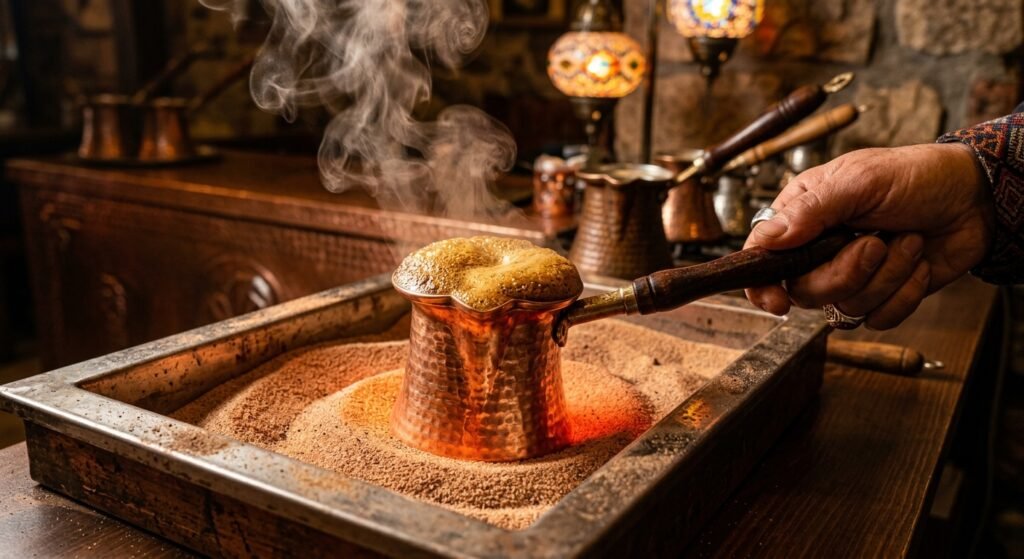
- Slow Cook: Place the cezve over low flame (or hot sand). Do not stir once heating starts.
- Collect the Foam: As the mixture heats, a thick dark foam will rise toward the top. Spoon a portion of the foam into your small cup before the pot boils over.
- Pour and Settle: Return the pot briefly to heat, allow it to rise again, then slowly pour the rest of the coffee down the inside edge of the cup. Wait 2 minutes for the fine grounds to settle at the bottom before sipping.
[External Link: Read cultural heritage details on the official GoTürkiye Tourism Portal]
3. Serving Customs & Coffee Fortune-Telling (Tasseography)
Drinking traditional Turkish coffee comes with explicit table etiquette and post-coffee traditions.
Why Is Water Always Served First?
Every authentic cup is served alongside a small glass of water and a bite of Turkish delight (lokum). You should drink a sip of water before coffee to cleanse your palate, ensuring you taste the full complexity of the roast.
The Art of Tasseography (Kahve Falı)
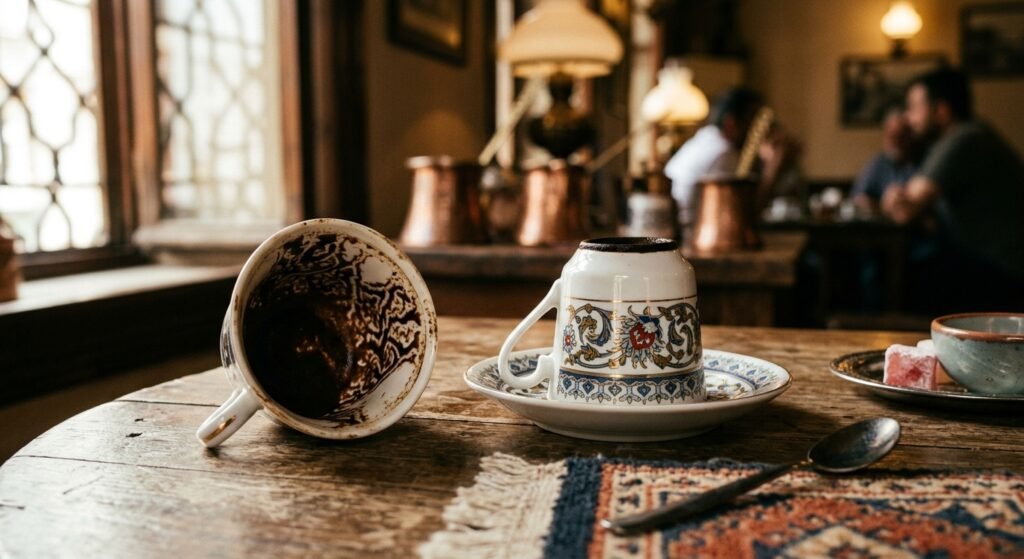
Once the coffee is consumed, the thick layer of sediment (telve) remains at the bottom. This gave birth to tasseography—the traditional art of reading coffee grounds:
- Place the saucer over the top of the finished cup.
- Make a personal wish, swirl the cup three times counter-clockwise, and flip it upside down onto the saucer.
- Allow the grounds to slide down and cool completely.
- An interpreter reveals insights based on the visual symbols—such as birds (news), roads (travel), or hearts (love)—formed by the dried dark sediment.
4. Where to Drink the Best Turkish Coffee in Istanbul
| Cafe Name | Neighborhood | Unique Specialty | Atmosphere |
| Mandabatmaz | Beyoğlu (İstiklal St) | Ultra-thick signature foam layer | Cozy alleyway stools |
| Çorlulu Ali Paşa Medresesi | Beyazıt | Sand-brewed coffee in a 1700s madrasa | Historic, hookah courtyard |
| Fazıl Bey’in Türk Kahvesi | Kadıköy | Traditional stone-ground antique blends | Authentic Asian-side market vibe |
| Şark Kahvesi | Grand Bazaar | Wood-charcoal brewed classic coffee | Bustling historic market street |
Conclusion
Experiencing traditional Turkish coffee is an essential journey into history, craftsmanship, and social connection. From specifying your sweetness level to savoring every foamy sip and reading your fortune in the grounds, this time-honored tradition offers a sensory connection to centuries of Ottoman culture. When visiting Turkey, take a seat at a historic courtyard, order a medium cup (orta kahve), and enjoy the moment!
Frequently Asked Questions (FAQs)
Do you drink the sludge at the bottom of traditional Turkish coffee?
No. You should stop drinking once you reach the thick layer of grounds (telve) at the bottom of the cup. The grounds settle naturally to create a smooth liquid top layer, while the bottom sediment is saved for cooling and fortune-telling.
Why is traditional Turkish coffee so strong?
Because the fine grounds are simmered directly with water without filter paper, the extraction releases maximum oils and aromatic compounds, giving it a heavier body and bolder flavor than standard drip coffee.
Can you add milk to traditional Turkish coffee?
Traditionally, milk is never added. The coffee is intended to be enjoyed black, with sweetness adjusted purely through sugar during the brewing stage. However, regional variations like Mihrimah Sultan or Sütlü Türk Kahvesi use warm milk instead of water for a milder taste.
1 thought on “Traditional Turkish Coffee: History, Rituals, & Guide”