morning market and cooking tour in Chiang Mai Chiang Mai is widely considered the culinary capital of Northern Thailand. Nestled amidst mountain ranges, the city boasts a distinct food culture defined by aromatic herbs, hand-pounded curry pastes, and rich coconut broths. While eating at local night bazaars is a must, joining a morning market and cooking tour in Chiang Mai offers travelers an interactive, hands-on deep dive into authentic Thai gastronomy.
These half-day and full-day culinary experiences bridge the gap between fresh farm ingredients and home-cooked Thai feasts. From navigating bustling fresh markets alongside expert local chefs to grinding curry pastes with a traditional granite mortar and pestle, this step-by-step breakdown explains what to expect on a morning market and cooking tour in Chiang Mai.
Key Takeaways
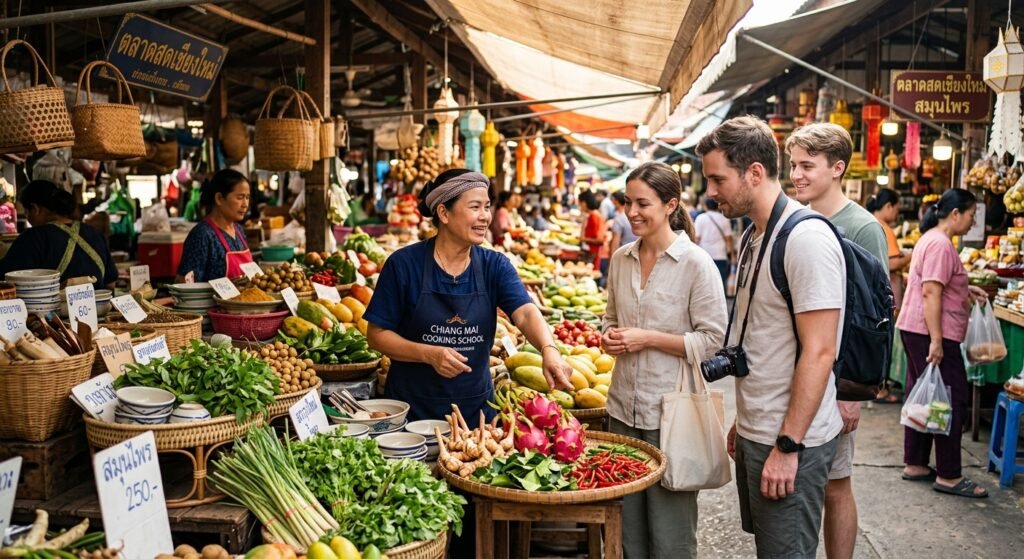
- Guided Ingredient Discovery: Morning tours begin at local fresh markets (like Siri Wattana or Woraros) where guides teach you how to pick fresh galangal, lemongrass, coconut cream, and Thai holy basil.
- Hands-On Preparation: Expect to cook 4 to 6 authentic dishes from scratch—including curries, stir-fries, soups, and classic desserts like mango sticky rice.
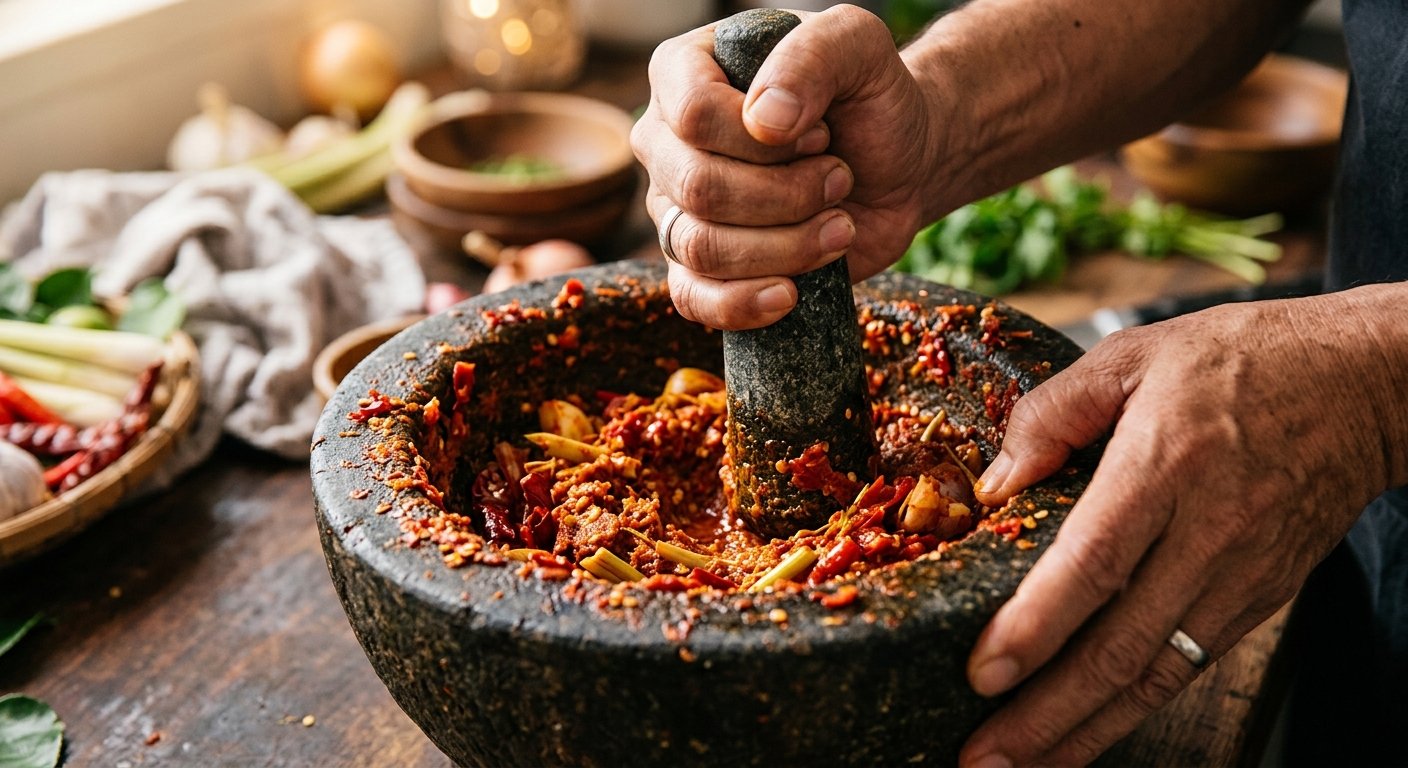
- Mortar & Pestle Crafting: A highlight of any authentic class is pounding fresh aromatics into rich curry pastes by hand.
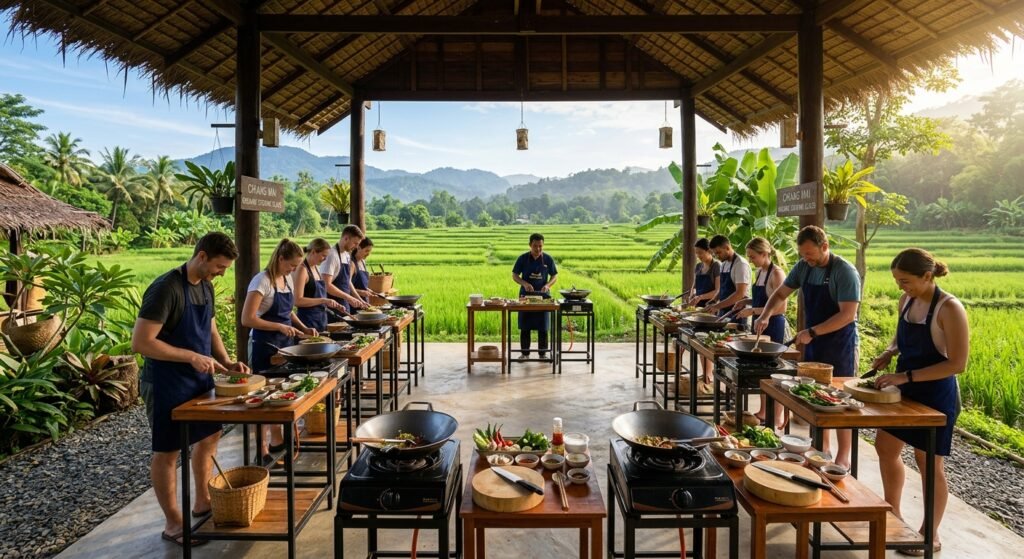
- Organic Farm Settings: Many popular cooking schools operate outside the city center on organic farms, offering tranquil garden settings for your afternoon feast.
1. The Morning Market Exploration: Sourcing Fresh Ingredients
Your culinary journey starts early in the morning when local markets are alive with color, fresh aromas, and busy vendors.
Learning to Identify Key Thai Aromatics
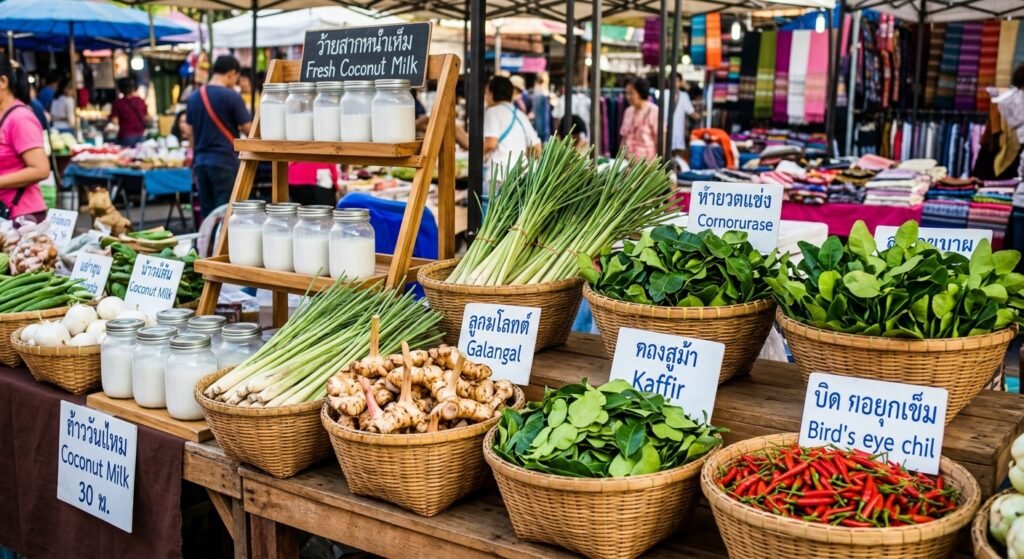
Guided by your chef, you will walk through market aisles to touch, smell, and taste raw ingredients essential to Northern Thai cuisine.
- Essential Herbs & Roots: Distinguishing galangal from ginger, fingerroot (krachai), and Thai holy basil from sweet basil.
- Coconut Milk Extraction: Watching vendors grate fresh coconut flesh and extract thick cream versus thin coconut water.
- Curry Paste Bases: Sourcing fresh turmeric, kaffir lime zest, and bird’s eye chilies.
2. Transport to the Kitchen: City Studios vs. Organic Countryside Farms
After sourcing ingredients at the market, tours transfer guests to their dedicated cooking stations.
[Internal Link: Check out our complete review on whether guided street food tours are worth it]
Urban Cooking Studios
Located within the historic Old City walls, indoor urban kitchens offer air-conditioned cooking bays and convenience for travelers on tight schedules.
Organic Countryside Farms
Located 20 to 30 minutes outside central Chiang Mai, farm-based schools invite guests to stroll through organic gardens to pick additional herbs, flowers, and vegetables right before cooking.
[External Link: Discover authentic regional culinary highlights on the official Tourism Authority of Thailand Portal]
3. The Hands-On Cooking Class: From Woks to Curry Pastes
Once settled at your personal cooking station, the interactive cooking phase begins under step-by-step chef guidance.
Pounding Curry Pastes by Hand
Before turning on the wok burners, class participants work in pairs or individually to pound raw aromatics using traditional granite mortars and pestles. You will create bases for classics like:
- Khao Soi: Northern Thailand’s iconic coconut curry noodle soup.
- Green or Red Curry: Aromatic pastes infused with fresh green chilies or dried red chilies.
Mastering High-Heat Wok Cooking
Chefs demonstrate proper wok temperature control to ensure stir-fried dishes maintain crisp textures without burning:
- Pad Thai: Balancing sweet tamarind, salty fish sauce, and fresh lime.
- Tom Yum / Tom Kha Soup: Infusing broths with crushed lemongrass and kaffir lime leaves.
4. Typical Tour Itinerary & Menu Overview
| Timeframe | Activity Stage | Key Highlights & Deliverables |
| 08:30 AM – 09:30 AM | Market Guided Tour | Ingredient tasting, fresh coconut extraction, market shopping |
| 09:30 AM – 10:15 AM | Farm/Studio Transfer | Organic garden walk and herb picking |
| 10:15 AM – 12:30 PM | Cooking Session 1 | Curry paste pounding, soup creation, and stir-fry wok cooking |
| 12:30 PM – 02:00 PM | Dining & Dessert | Enjoying prepared meals, making Mango Sticky Rice, recipe wrap-up |
Conclusion
Booking a morning market and cooking tour in Chiang Mai is widely considered one of the most rewarding cultural experiences in Southeast Asia. By pairing authentic market ingredient sourcing with hands-on wok instruction and traditional paste pounding, you gain practical skills to recreate vibrant Thai flavors long after your trip ends. Put on your apron, pick up a mortar and pestle, and enjoy the taste of Northern Thailand!
Frequently Asked Questions (FAQs)
Is a morning market and cooking tour in Chiang Mai suitable for beginners?
Yes! Professional instructors design these classes for all culinary skill levels. Step-by-step demonstrations ensure even absolute beginners can prepare delicious, authentic Thai dishes safely.
Can classes accommodate vegetarian, vegan, or gluten-free diets?
Absolutely. Almost all cooking schools in Chiang Mai easily accommodate dietary restrictions by swapping fish sauce for soy sauce, substituting tofu or mushrooms for meat, and using gluten-free ingredients.
What should I wear on a morning market and cooking tour?
Wear lightweight, breathable clothing and comfortable walking shoes for the market walk. Kitchens provide aprons, but light natural fabrics (like cotton or linen) help keep you cool near hot woks.
1 thought on “morning market and cooking tour in Chiang Mai”