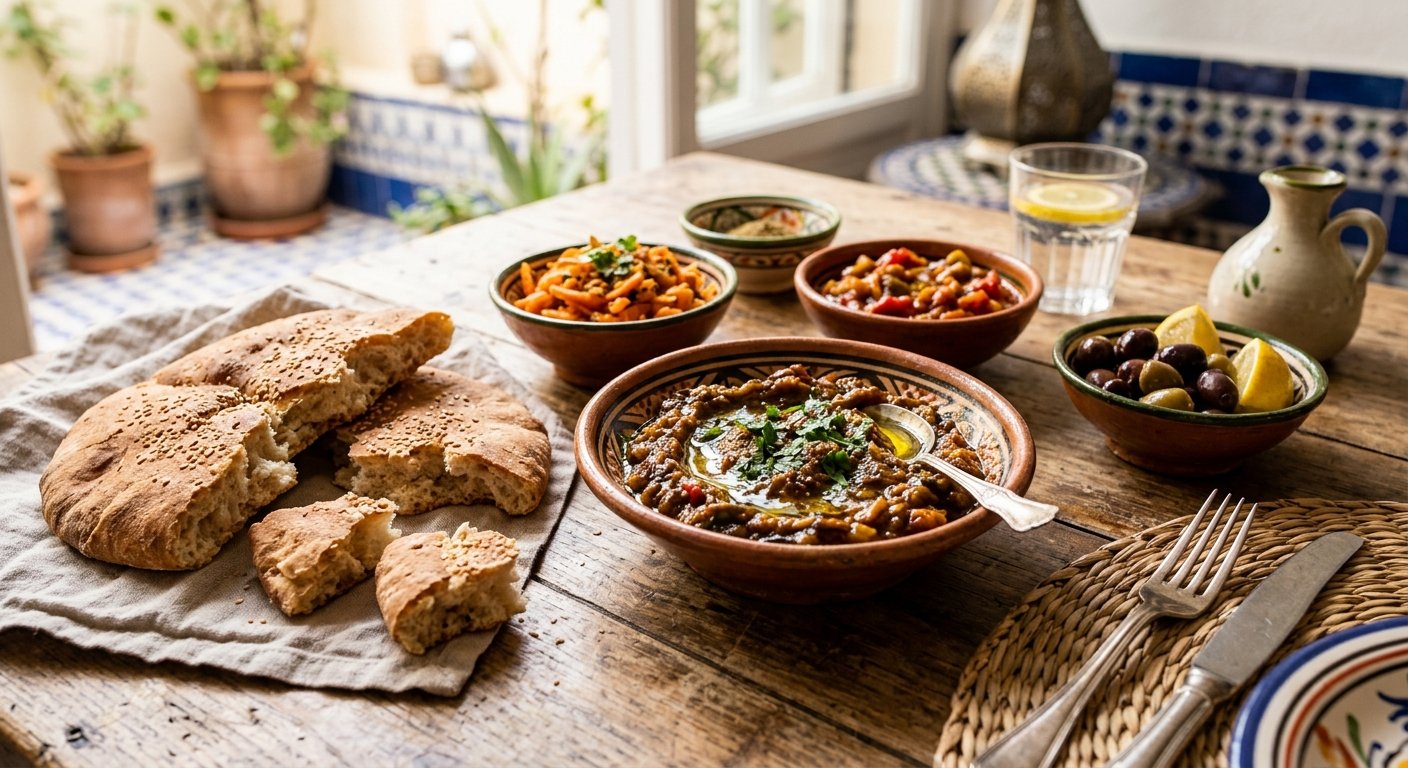
Moroccan cuisine is a rich tapestry woven from Amazigh (Berber), Arab, Andalusian, and Mediterranean traditions. While couscous has earned global fame as the nation’s culinary ambassador, it merely scratches the surface of what the country’s kitchens offer. To truly appreciate North African gastronomy, travelers must venture into the depth of traditional Moroccan dishes slow-cooked in earthenware vessels, wrapped in delicate pastry, or simmered in aromatic street stall
From the savory-sweet complexity of royal feast pies to the earthiness of clay-pot stews buried in hammam ashes, exploring traditional Moroccan dishes offers an incredible sensory journey. This guide takes you beyond the basics, highlighting iconic regional specialties, essential spices, and authentic dining customs across Morocco.
Key Takeaways
- Beyond Couscous: Moroccan cuisine features diverse slow-cooked stews, savory-sweet pastries, and rich comfort soups.
- Mastery of Tagine: The conical clay vessel (tagine) traps steam, creating tender meats infused with ras el hanout, preserved lemons, and saffron.
- Regional Craft: Marrakesh is famous for Tanjia Marrakchia, while Fez is celebrated for intricate Pastilla.
- Essential Sides: Meals always feature warm crusty flatbread (Khobz) used as an eating utensil, paired with sweet mint tea (Atay).
1. Slow-Cooked Classics: Tagines and Tanjia
The pinnacle of traditional Moroccan dishes lies in the art of slow-cooking.
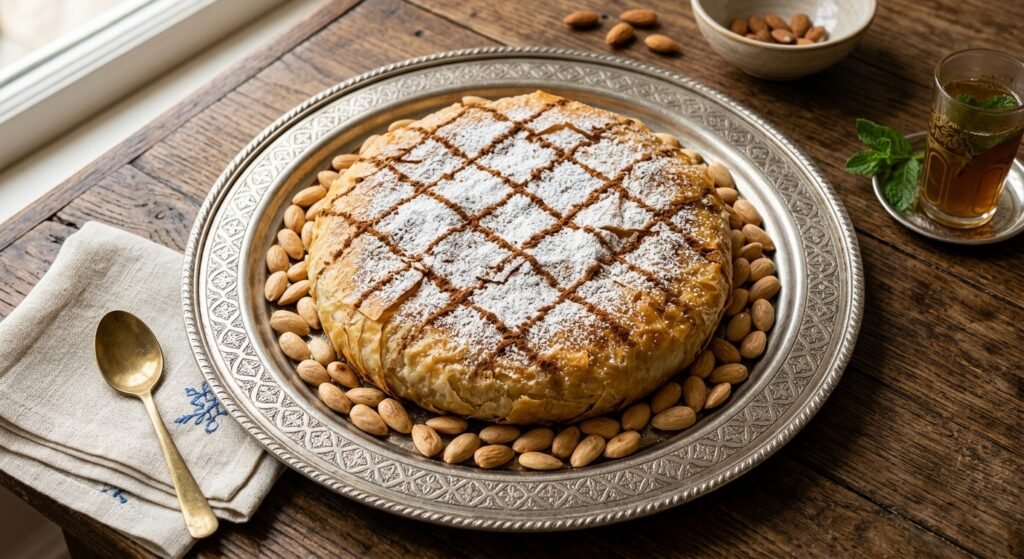
Tagine: The Conical Cooking Marvel
Unlike western stews, a tagine uses a conical earthenware lid to continuously return condensed moisture back to the food, tenderizing tough cuts over long hours.
- Lamb or Beef with Prunes (Tajine de Veau aux Pruneaux): A iconic celebration dish balancing savory meat, cinnamon, honey, and fried almonds.
- Chicken with Preserved Lemon and Olives: Tangy, salty, and aromatic, featuring tender chicken braised with salted lemons and cured green olives.
Tanjia Marrakchia: The Bachelor’s Stew
Unique to Marrakesh, Tanjia is a urn-shaped clay pot packed with beef shanks, garlic, cumin, saffron, and preserved butter (smen). Sealed with parchment paper, it is taken down to the neighborhood bathhouse (hammam) to slow-roast buried in warm wood ashes for six to eight hours.
2. Savory-Sweet Pastries & Rich Comfort Soups
Moroccan cooks excel at blending sweet spices like cinnamon and orange blossom water with rich savory meats.
[Internal Link: Read our full culinary guide to navigating street food stalls across North Africa]
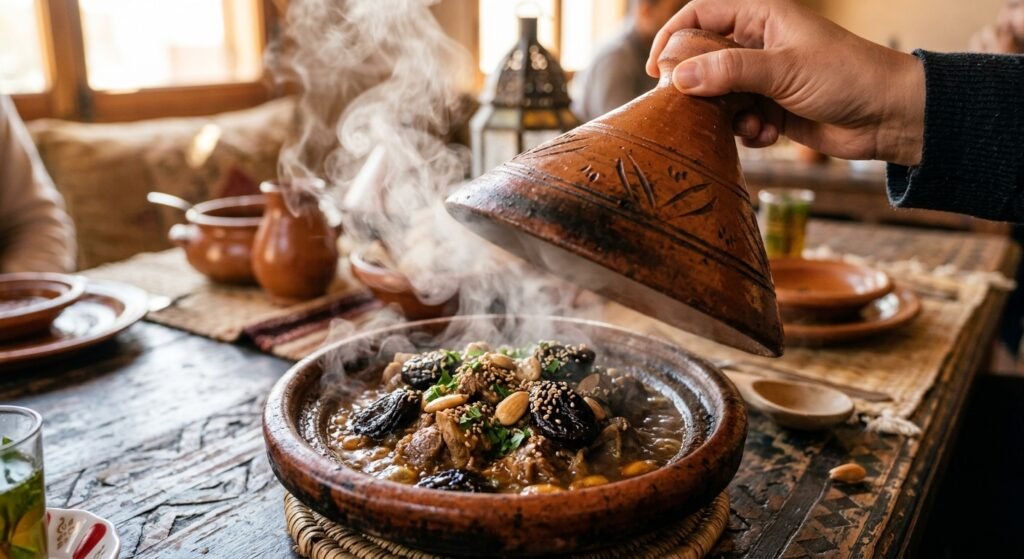
Pastilla (Bastilla): The Royal Feast Pie
Hailing historically from Fez, Pastilla is one of the most sophisticated traditional Moroccan dishes. It layers paper-thin warqa pastry dough around shredded spiced poultry (traditionally pigeon, now commonly chicken) cooked with almonds, eggs, and saffron. Before serving, the top is dusted generously with powdered sugar and ground cinnamon.
Harira: The Soul-Warming Soup
Harira is a velvet-textured soup made of tomatoes, lentils, chickpeas, cilantro, and fine vermicelli noodles. Seasoned with ginger and pepper, it serves as the traditional dish to break the fast during Ramadan, typically paired with sweet dates and honey-soaked Chebakia pastries.
[External Link: Explore regional cultural heritage food traditions on UNESCO’s Intangible Cultural Heritage platform]
3. Flavorful Street Eats & Side Dishes
Eating like a local means stepping out of formal dining rooms and grabbing freshly prepared bites along medina alleyways.
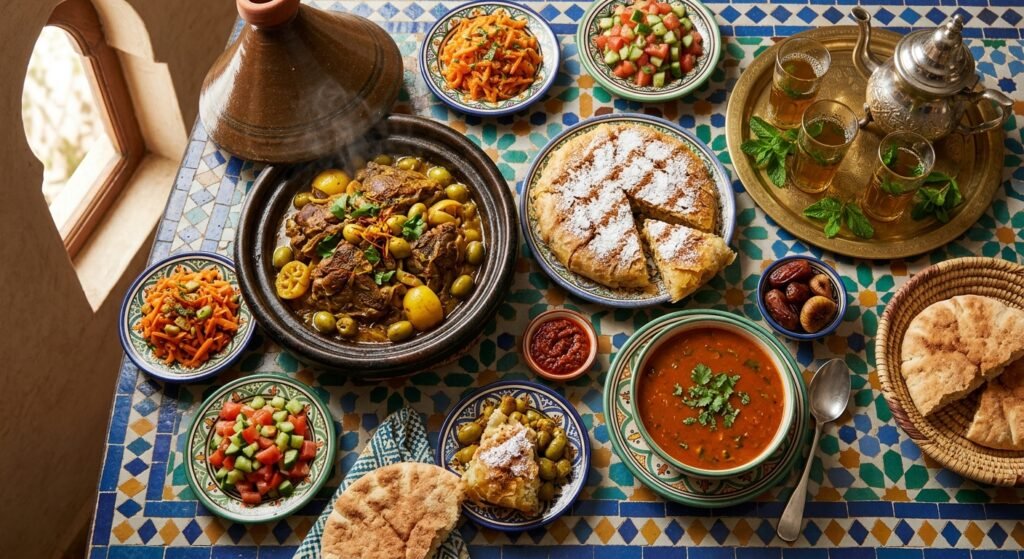
Must-Try Medina Bites
- Zaalouk: A cooked side salad of roasted eggplants, tomatoes, garlic, cumin, and sweet paprika eaten warm or cold with bread.
- Bissara: A velvety, rich soup made from dried fava beans or split peas, heavily drizzled with olive oil, cumin, and red pepper flakes.
- Méchoui: Pit-roasted whole lamb seasoned simply with salt and cumin until the meat falls away from the bone.
4. The Rituals of the Moroccan Table
Plaintext
1. Wash Hands Prior to Eating ➔ 2. Eat with Right Hand ➔ 3. Use Khobz as Utensil ➔ 4. Finish with Mint Tea
- Bread as the Primary Utensil: In Morocco, round flatbread (Khobz) replaces forks and spoons. Diners use small wedges of bread held in their right hand to scoop up tagine meats and sauces.
- Communal Dining: Dishes are traditionally set in the center of the table, with each guest eating from the triangular section directly in front of them.
- Moroccan Mint Tea (Atay): Poured from high above to create a light layer of foam (rizia), green tea steeped with fresh spearmint and sugar caps off every meal.
Conclusion
While couscous will always hold a cherished place on the Friday family table, exploring traditional Moroccan dishes unlocks a far deeper world of North African flavor. From the sweet cinnamon notes of a crisp Pastilla to the slow-cooked richness of a furnace-baked Tanjia, Morocco offers endless culinary discoveries. Step into the medina, pull up a stool, and savor the legendary warmth of Moroccan hospitality!
Frequently Asked Questions (FAQs)
What is the most famous traditional Moroccan dish besides couscous?
The most famous traditional dish is the Tagine, a slow-cooked stew prepared in a conical clay pot featuring tender meats, vegetables, and aromatic spices like saffron and cumin.
Is traditional Moroccan food spicy hot?
No, traditional Moroccan food is highly aromatic rather than incendiary. Dishes rely on warm spices such as cinnamon, cumin, turmeric, ginger, and saffron. Hot chili paste (Harissa) is typically served on the side.
How do vegetarians eat traditional Moroccan dishes?
Vegetarians can easily enjoy vegetable tagines, Bissara (fava bean soup), Zaalouk (smoky eggplant dip), fresh cucumber-tomato salads, and fried potato cakes (Maakouda).
1 thought on “Traditional Moroccan Dishes You Have to Try Beyond Couscous”